
Teachers must ensure they are providing a safe learning environment for children, and display cultural competence both in, and out, of their classroom.
cultural competence: “the process by which individuals and systems respond respectfully and effectively to people of all cultures, languages, classes, races, ethnic backgrounds, religions, and other diversity factors in a manner that recognises, affirms, and values the worth of individuals, families, and communities and protects and preserves the dignity of each.” (NASW Standards for Cultural Competence in Social Work Practice, 2001).
The following guides can be used to inform teachers how to be supportive and inclusive when teaching a diverse class of students.
Ability / Disability
What can we do to ensure that people with disabilities are included/catered for in a school setting? Some implications for practice in Australian Schools to support the inclusion of students with disabilities and additional needs
- positive language when talking about things related to disability/ability
- programs for supporting students with disabilities
- appropriate materials to suit the child such as boccia
- running classes which help students to develop a knowledge and understanding of disabilities
- including disability within the curriculum as something to be taught
- games/activities that include people with and without a disability
- ensuring that all staff at the school acknowledge and respond to the diverse needs of students with disabilities
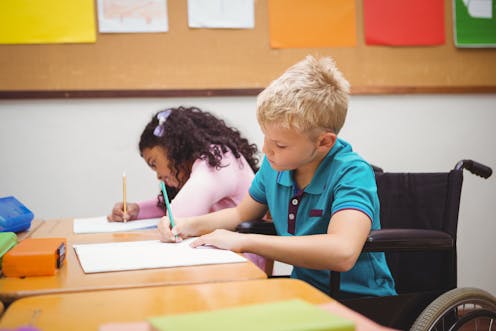
- positive classroom environment where everyone feels included. This includes things like eg- if their is a student in a wheelchair. The teacher should model good language behaviors such as saying things like “everyone please move to the court” instead of “everyone please stand up to move to the court.”
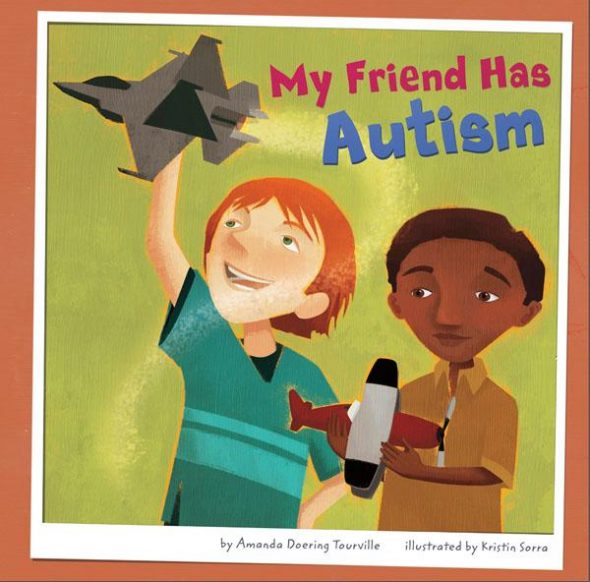
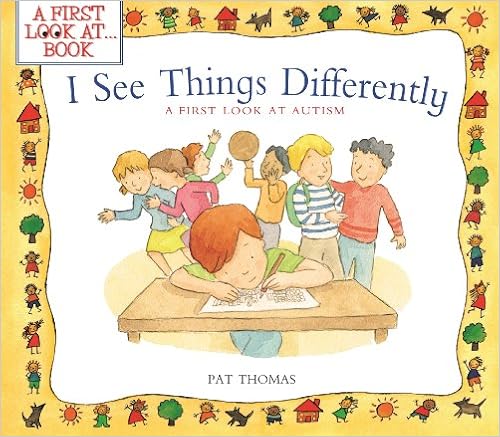
Here are some useful books that educators may read to their students. These books relate to disabilities and the inclusion of people who may be perceived as ‘different’. These books will ultimately help students develop their understanding of how each individual can be diverse within the classroom.


Sex / Gender
Next steps for teachers
– Avoid discriminatory teaching methods e.g. avoid dividing a class by gender for example “boys versus girls” or “boys can go first and girls can go second.”
– Ensure equal time is spent with all students in the classroom and playground
– Ensure all students (regardless of gender or sexuality) are treated the same way, must follow the same rules, and receive the same rewards and punishments for behaviours
– Ensure learning is relevant to a wide range of choices after school (relevant to a range of trades, occupations, hobbies, lifestyle choices)
– Ensure students know they can confide in you about concerns regarding their sexuality or gender e.g. display the pride flag somewhere near your desk for example a small badge or sticker
– Ensure all students are given the same opportunities regarding subject choices, sporting teams etc.
– Avoid creating a stigma around sexuality choices and avoid positioning students to believe it is “normal” to be heterosexual and either a male or female. Instead invite the possibility of a range of sexualities and gender identities and teach students it is acceptable to challenge norms, stereotypes and explore their own identities
– NEVER make assumptions about a students sexuality or gender based on their actions, clothing choices, or attitudes
(Association of Womens Educators, 1996).
The Pride Flag

The rainbow flag or the pride flag is a symbol of diversity and equality for all people, and symbolises pride for lesbian, gay, transgender, bisexual and queer people. Each horizontal colour has a specific meaning as follows, and the colours on the left of the flag show that the flag is representative of all ethnicities and races (relating to the focus area ethnicity / race).
- Red means life
- Orange means healing
- Yellow means sunshine
- Green means nature
- Blue means harmony
- Purple means spirit
This flag can be used by a teacher, and simply shown near their desk in the form on a sticker or a badge. This subtle representation shows students that the teacher is welcoming and accepting of all sexual preferences, and is available to chat to students about any issues they may have.
A teacher can incorporate the use of the pride flag into the curriculum – and teach students what the flag means and how to be inclusive of all sexualities and genders. The flag could be taught about during humanities class or history class (teaching about historical movement of marriage equality). This awareness will help make children feel equal regardless of their sexuality or gender.
Gender Spectrum activity
An approach that some schools are taking when considering gender, is teaching children that instead of fitting a certain category, they can view their gender in terms of a spectrum. The following spectrum chart is a valuable resource that teachers can use in their classroom during a homeroom class or health class. Children can each have a personal copy of the spectrum chart, and spend time discussing where they may fit in terms of biological sex, gender identity, gender expression and gender presentation. Children are encouraged to share their ideas and feeling with the class, but may prefer to keep their spectrums private.

Useful videos for teachers
Below, there are links to videos that are useful for teachers. These videos are not necessarily to be shown to students, as much of the content is too heavy for them, however they are excellent clips that will get teachers thinking about opinions and their own actions.
Gender equality explained by children
https://www.youtube.com/watch?v=hLr2GNRnmXM
Gender diversity in schools
https://www.youtube.com/watch?v=5gdUkRsLqwA
A class that turned around kids’ assumptions of gender roles
https://www.youtube.com/watch?v=G3Aweo-74kY
How male privilege made me a feminist
https://www.youtube.com/watch?time_continue=23&v=X3yvGaMQ2Jg
A gender neutral education
https://www.youtube.com/watch?v=3Y4lgKnmWSk
Creating gender inclusive schools
https://www.youtube.com/watch?v=GTHu_U3mj9M
Ethnicity / Race
As educators, we teach should diversity in various ways. Here are some children’s book that you can read to the class about ethnicity/race, culture and diversity:

In order to achieve a culturally safe classroom environment, educators must be culturally responsive. Deady (2017) shared some tips on how teachers can be culturally responsive:
- Assess your own behaviour
Always bear in mind that some people have different cultures, opinions and attitudes towards different things, respect that. The first step to having a culturally safe classroom is being aware of your own actions and working to shift your mindset to be more inclusive and open-minded.
2. Get to know your students
Do your own research about the cultures of your students. Take the time to get to know your students as individuals and create an environment where students of all culture feels comfortable and ready to learn.
3. Make your classroom a judgment-free zone
Encourage the students to ask questions, to voice out their opinions and to value differences.
4. Adapt your teaching
Assess your teaching and modify it to accommodate to all your students. Do your research and incorporate different teaching strategies and activites in the classroom. Make lessons interactive and collaborative to help students improve their social and academic skills.
5. Include all cultures in your teaching
Lessons should be multicultural and inclusive. Try to introduce the different cultures by making the students share their cultures and traditions in the class.
Activities:
Saying the acknowledgement of country. Teachers can add the acknowledgement of country in their morning routine. This helps students understand that by saying it we are acknowledging and paying respect to the Indigenous people.

Provide students different activity sheets, after answering the activity students can share their answers and what they have learned.


Additional resources for teachers:
Lesson plan for harmony day/week: https://www.harmony.gov.au/get-involved/schools/lesson-plans
Different teaching activities about cultural diversity: https://www.globaleducation.edu.au/1842.html
References:
Association of Women Educators. (1996). Gender and Education Guidelines and Checklists. Retrieved from http://awe.asn.au/drupal/sites/default/files/AWE-Gender-and-Education-Guidelines-and-Checklists.pdf
Deady, K. (2017). 5 steps to becoming a culturally responsive teacher. Retrieved from https://www.teachaway.com/blog/5-steps-becoming-culturally-responsive-teacher
National Association for Social Workers. (2011). Standards and Indicators for Cultural Competence. Retrieved from https://www.socialworkers.org/LinkClick.aspx?fileticket=PonPTDEBrn4%3D&portalid=0
Switch Witch. (2016). Children’s book. the best on diversity, inclusion and compassion. Retrieved from http://switchwitches.com/childrens-books-best-diversity-inclusion-compassion/
Ward, R. (2019). Royal Melbourne Institute of Technology, Bundoora.
 Supporting Student Diversity